Why Managed Offices Are Replacing Traditional Leasing in India: The Enterprise Shift in 2026
Published on August 5, 2026

Published on August 5, 2026
For decades, leasing office space followed a familiar playbook. Companies signed long-term leases, invested heavily in interiors, hired facility management teams, and managed everything from internet connectivity to housekeeping.
That model worked in a predictable business environment. Today's business landscape is different. Organizations are expanding faster, entering new cities more frequently, embracing hybrid work, and placing greater emphasis on operational agility. As a result, workspace decisions are no longer driven solely by square footage—they are strategic business decisions.
Across India, enterprises, multinational corporations, GCCs, high-growth startups, and mid-sized businesses are increasingly choosing managed offices over conventional leases.
The shift isn't simply about flexibility. It's about speed, financial efficiency, employee experience, and reducing operational complexity.
Office space has traditionally been viewed as a fixed asset.
Today, leading organizations are treating workspace as a strategic service. Business leaders are asking different questions:
These questions naturally lead many organizations toward managed office solutions.
Setting up a conventional office can take months. Site selection, lease negotiations, design approvals, fit-outs, vendor coordination, IT infrastructure, and compliance all add time.
Managed offices significantly shorten this timeline by providing move-in-ready workspaces with essential infrastructure already in place.
This allows businesses to focus on hiring, serving customers, and growing operations instead of managing construction projects.
Traditional office setups require substantial upfront investment in interiors, furniture, IT equipment, meeting rooms, security systems, and common facilities.
Managed offices convert much of this investment into predictable operating expenses.
For CFOs, this means capital can be directed toward initiatives that generate growth—such as product development, technology, hiring, and market expansion.
Few organizations can accurately predict their headcount two or three years in advance.
Business conditions evolve, hiring accelerates or slows, and expansion plans change.
Managed office solutions offer greater flexibility to scale workspace requirements without the disruption associated with relocating entire offices.
This operational agility has become a competitive advantage.
Employees increasingly expect workplaces that support collaboration, wellbeing, and productivity.
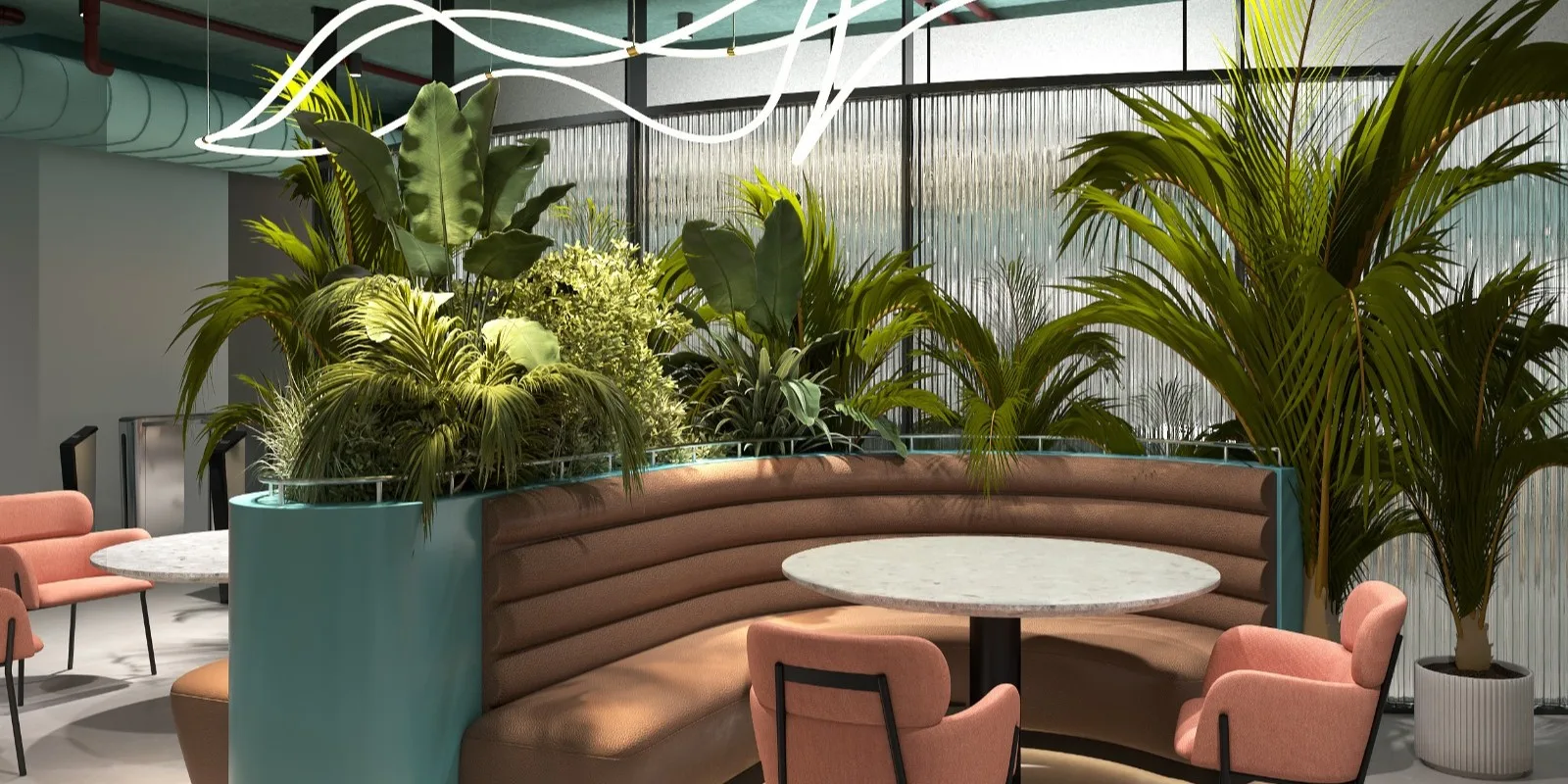
Modern managed offices provide thoughtfully designed meeting spaces, breakout areas, ergonomic workstations, enterprise-grade connectivity, hospitality services, wellness amenities, and professional workplace management.
These features contribute to an environment where teams can perform at their best.
Running an office involves managing numerous service providers—from housekeeping and maintenance to internet providers, security, utilities, and compliance.
Managed office providers consolidate these responsibilities into a single operational model, allowing internal teams to focus on core business priorities rather than day-to-day facility management.
Managed offices are no longer viewed as a solution exclusively for startups. Today, they are being adopted by:
The common requirement is clear: high-quality workspace that can support growth without creating operational friction.
Modern workplaces increasingly integrate digital technologies to improve efficiency and user experience.
Examples include:
As workplace technology continues to evolve, businesses are placing greater value on office environments that are ready for these advancements.
India's office market is entering a new phase. Organizations are prioritizing agility, employee experience, financial efficiency, and speed over long-term ownership models. Workspace is becoming a business enabler rather than a fixed cost.
Managed offices are well positioned to support companies navigating growth, market expansion, and changing workforce expectations. For organizations evaluating their next office strategy, the question is increasingly shifting from "Should we consider managed offices?" to "How quickly can we leverage a workspace model that supports our business goals?"
As the future of work continues to evolve, the companies that remain agile will be better equipped to adapt, innovate, and grow.
About Spring House
Spring House partners with growing businesses, enterprises, and global organizations by delivering professionally managed workspaces designed for flexibility, operational excellence, and exceptional employee experiences across India's leading business destinations.


